
Global Scholars
The Global Scholars Program at St. Teresa’s Academy (STA) is a comprehensive, multi-year, co-curricular certificate program designed to develop globally competentleaders through academic integration, experiential learning, job shadowing, cultural immersion, and service aligned with international priorities. The program culminates in a Global Scholars Certificate supported by a digital portfolio and capstone project. The Global Scholars Program is intentionally aligned with STA’s Portrait of a Graduate, which defines the school’s essential learner outcomes.
Benefits:
- Growth through real-world experiences
- Increased confidence in communication
- Deeper cultural awareness and empathy
- Ethical awareness and value-based decision making
- Leadership and agency
- Adaptability and problem-solving
- Personal transformation and identity development
Global Learning from the joint National Association of Independent Schools (NAIS)/Institute for Global Learning (IGL).
“Perspective alone, however, is not enough. Students also need frameworks for understanding how the world works, specifically how systems intersect, how power functions, and how local decisions have global impacts. That is the purpose of global education. Global education is not a single course, a trip, or an extracurricular activity. It is a way of framing learning so students grasp that the world is interconnected. It prompts questions like: How do local decisions create global effects? How do histories influence whose knowledge is valued? How are shared challenges experienced differently in various contexts? Global education guides students from merely knowing facts to understanding systems and connections. Without this perspective, global issues can seem distant or overwhelming. With it, students start to recognize patterns, relationships, and their own responsibility. They learn to ask not only what is happening, but why it happens, for whom and with what consequences.” (Interconnected, Institute for Global Learning)

 |
 |
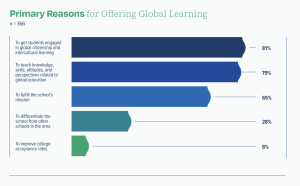
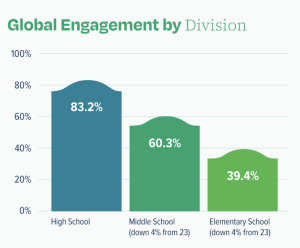
*Highlights from linked report
